
This Fathers Day we’re giving a short practical guide to fathers raising sons. Get a PDF Download of the guide here, or read it below.
Introduction
The Task
Boys are born, but men are made.
Masculinity was created, by God’s design, and God’s design is good. God has entrusted earthly fathers with the responsibility of helping guide their sons toward mature manhood. This short guide isn’t exhaustive, but a starting point. And it’s meant to be carried out in the context of a local church full of brothers and fathers in Christ who help along the way.
PART ONE
Four Key Principles of Manhood
Four key principles of masculinity every boy needs to pursue in order to become a man.
THE FIRST PRINCIPLE
R — Reject Passivity
“She also gave some to her husband who was with her, and he ate.”
Genesis 3:6b (ESV) • Scripture Anchor: Genesis 3
THE BIG IDEA
Passivity isn’t neutral — it’s a choice, and it has consequences.
-
Adam was charged to work and guard the garden
-
Adam stood by silently while the serpent spoke lies to his wife
-
God held Adam responsible first, before Eve
-
Rather than own it, Adam blamed his wife — and then God
KEY QUESTIONS
-
What would it have looked like for Adam to actually guard the garden?
-
What are the consequences of passivity both in the garden and in real life?
-
When something goes wrong, what’s your first instinct — ownership or excuse?
-
Who are you responsible to protect, and are you doing it?
OPTIONAL
Movie Night: The Great Escape (1963)
Men who refuse to accept captivity as their permanent condition.
Read Together: Beowulf (trans. Seamus Heaney)
A warrior who steps toward the monster when everyone else steps back.
Quote from Joe: “Every man is called to leadership of some type. But first you must lead yourself in your own personal relationship with the Lord. You can’t lead others if you don’t lead yourself.”
THE SECOND PRINCIPLE
E — Embrace Responsibility
“The Lord God took the man and put him in the garden of Eden to work it and keep it.”
Genesis 2:15 (ESV) • Scripture Anchor: Genesis 1:26–2:25
THE BIG IDEA
Responsibility isn’t a burden imposed on men — it’s the shape of what they were made for.
-
Adam was created as God’s representative on earth, given dominion and charge
-
Responsibility was built into Adam before the Fall — this is design, not punishment
-
Adam was called to work the garden — to cultivate, develop, and bring order
-
Adam was called to keep the garden — to guard, protect, and defend what was entrusted to him
-
The Fall didn’t erase this calling — fallen men still bear the image of God and are still made to cultivate and protect
KEY QUESTIONS
-
What has God specifically entrusted to you as your responsibility right now? Make a list.
-
What does it look like to cultivate — not just maintain — what you’ve been given in each area of life?
-
Why is it hard to take responsibility at times? What holds you back?
-
How does knowing this is design — not just duty — change how you feel about responsibility?
OPTIONAL
Movie Night: The Magnificent Seven (1960)
Men who ride toward danger to protect people who can’t protect themselves.
Read Together: The Fellowship of the Ring by J.R.R. Tolkien
A company who accepts a burden none of them wanted.
Quote from Joe: We live in a world where many think “someone else will take care of that”. You start with taking responsibility for small things like making your bed so that one day you will be given more. Faithful in little, faithful in much.
THE THIRD PRINCIPLE
A — Act and Lead Courageously
“Only be strong and courageous.”
Joshua 1:18b (ESV) • Scripture Anchor: Joshua 1
THE BIG IDEA
Courage isn’t the absence of fear — it’s obedience in the face of it.
-
Joshua had just lost Moses, the only leader Israel had ever known, and faced an impossible task
-
God’s command was essentially threefold: get up, get moving, get after it
-
The call to courage was inseparable from the promise of God’s presence — “I will be with you”
-
God doesn’t call men to act in their own strength — he calls them to act in his
-
Whatever God assigns to a man, he equips and accompanies
KEY QUESTIONS
-
Is there anything you know you’re supposed to do but keep delaying?
-
Is there anything in life that has stalled your forward motion? A sin pattern keeping you stuck? An ungodly priority or desire?
-
How would hard things in life change if you really felt and believed God was going with you to do it?
-
What would it look like to take one concrete step forward – to act and lead – this week?
OPTIONAL
Movie Night: Master and Commander: The Far Side of the World (2003)
A commander who holds his nerve and presses forward against long odds.
Read Together: Treasure Island / The Red Badge of Courage
Stevenson & Crane. A boy thrust into danger; an honest reckoning with fear.
Quote from Joe: “Your son will face regular moments where they can choose to be brave when their faith or friends are belittled or shrink back. Equip them to act.”
THE FOURTH PRINCIPLE
L — Look to the Greater Reward
“But seek first the kingdom of God and his righteousness, and all these things will be added to you.”
Matthew 6:33 (ESV) • Scripture Anchor: Matthew 6:19–34
THE BIG IDEA
Most of what men exhaust themselves chasing will not survive this age — a few things will last forever.
-
The world offers endless things to give yourself to — most are dust and vapor
-
Jesus names what actually endures: your relationship with God, his church, your witness to the world
-
Anxiety is a symptom of misplaced investment — we worry most about what we’ve bet everything on
-
God doesn’t call men to passivity — he calls them to change what they pursue
-
We invest with full force in what God says is eternal, and we entrust everything else to him
KEY QUESTIONS
-
Where does anxiety show up most in your life, and what does that reveal about what you treasure?
-
What are you currently spending the most energy on — and will it matter in 100 years?
-
What would it look like to practically “seek first the kingdom” this month?
-
What is one eternal investment — a relationship, a discipline, a witness — you could lean into more intentionally?
OPTIONAL
Movie Night: Chariots of Fire (1981)
Two runners, two different rewards, one question: what are you actually running for?
Read Together: The Last Battle / Les Misérables
Lewis & Hugo. The end of all things; a life reordered by grace.
Quote from Joe: “I highly encourage you to teach and talk about Matthew 6:33. It has been my own ‘northstar’ when faced with life changing decisions. Living with an eternal view will keep your son on the right path.”
PART TWO
Rhythms and Ceremonies
Principles give a young man a framework. Rhythms make it ordinary. Ceremonies make it unforgettable.
RHYTHMS
Weekly
Find a fixed time — daily or weekly — to read a short passage of Scripture together and talk about it. The time matters less than the consistency. Don’t overthink the curriculum. Don’t wait for the perfect moment.
One example: a father and son working through Marty Machowski’s Brave and Bold every morning from 6:45–7:00am before school. Fifteen minutes. Same time. Every day.
The fruit of this rhythm is rarely visible in the moment. Stick to it.
Monthly
Once a month, go do something your son wants to do. Go to his favorite burger spot. Find a favorite team to follow. Go on drives and explore. Just create one on one time and space.
Then ask questions. Ask him about his relationships – with God, with siblings, with friends, with girls. Be curious and interested in his life.
Over time, use these spaces to open up the bigger conversations — sex, romance, work, failure, faith, money, marriage. Don’t save these topics for a single “talk.” Build them into the rhythm of ordinary life together.
CEREMONIES
Ceremonies create key markers on the path to manhood. Think of them as trail markers, helping a young man know he’s on the path and pointing him forward on the trail.
AGE 13
Manhood Journey Initiation
If you only do one ceremony, do this one.
Gather the men in your family and church who have shaped your son or who you want speaking into his life. Sit down together for a real meal. Ask each man to offer one piece of advice on growing into manhood — short, honest, from experience. Even better: ask them to write it down so your son can keep it.
Then give him a sword — or something similarly significant, remarkable, and memorable.
Close the evening with every man laying a hand on him and praying over him. Let him feel the gravity of it, but also the commitment of those men to help him.
The Gift: A sword, or a significant gift with weight and meaning
AGE ???
The Failure
An unplanned but important stop on the road to manhood.
At some point your son, like all men, will fail. Maybe a secret sin comes to light. Maybe a neglected responsibility ends in disaster. Whatever form it takes, this moment will arrive unplanned and unasked for. Now what?
This will be a key marker in his relationship with God—and you can help him through it. Don’t downplay what happened; acknowledge its severity. Then lead him to Jesus, the only perfect man. Remind him that if he has repented, there is “therefore now no condemnation for those who are in Christ Jesus” (Romans 8:1).
This moment is your opportunity to teach your son how to repent and turn to Jesus with his failures. Don’t preach a gospel of “do more and try harder.” Preach “Look to Jesus, son.” Tell him about your own failures. Tell him how Jesus met you.
The Gift: A letter reminding him of his forgiveness in Christ to read when he’s failed and needs to turn back to Jesus. Ask him to keep it.
AGE 15–16
The Midpoint
He’s not a boy and not yet a man, but he’s on his way. Make a memory that acknowledges the distance he’s traveled and guide him forward.
Option A: Take on a physical challenge together — a long hike, a mountain, a remote campsite. Make it hard enough to mean something.
Option B: An epic road trip to see a favorite band or team. Make it inconvenient. Make it memorable.
Give him two gifts: a compass and one of your own well-worn Bibles — ideally one with notes, underlines, and years of margin scribbles in it.
Specifically encourage him at the distance you’ve seen him travel toward being a man. He won’t be perfect yet, but there are likely places you can say, “I see your effort here and I’m proud.”
The Gift: A compass and your own well-worn, well-marked Bible.
AGE 18
Beginning of Manhood Moment
Reassemble the men from the ceremony from age 13 if you can. Repeat the exercise. One piece of advice each. Let him hear how the counsel has shifted now that he’s standing at the edge of adulthood. Pray over him again.
But let this one be marked by celebration. He’s traveled far. He’s entered the beginning of manhood. Point out where God’s grace is at work in his life.
The Gift: A quality watch — something built to last, worn for decades. Something he’ll keep for the rest of his life. Tell him to make his time as a man in this world count.
AGE ??
Vocational Marker
When your son crosses a significant vocational threshold — finishing a degree, completing an apprenticeship, landing his first real role — mark it. The world will hand him a diploma but you can give him something uniquely Christian: an affirmation that he’s doing what he was made to do as a man in Genesis 1-2.
AGE ??
Marriage Marker
About a month before the wedding, before the chaos sets in, gather the men one final time. Keep it simple. Let them speak. Then pray over him as he prepares to become a husband. Send him into that marriage ceremony with support and encouragement from other men.
Final Hope
Jesus Christ, Our Savior and Example
All of us fall and fall as men. None of us are who we should be. That’s why Jesus came.
John 3:16 tells us “For God so loved the world that he gave his only son that whoever believes in him would not perish but have eternal life.”
As men, we cling to the gospel hope of what Jesus has done for us. We rest in that.
Then, in manhood we aim to imitate Jesus. Jesus Christ provides a hopeful picture of what it means to be a man in Romans 5:
-
Jesus was not passive but actively on his Father’s mission
-
Jesus accepted responsibility for his mission and even for all his people, going to the cross for them
-
Jesus leads courageous as the head of the church and is working a plan to restore all things
-
Jesus endured the cross for the eternal good of his people
May we raise boys who becoming men following hard after Jesus.
The Authors
Joe Alcantar, Jr. is an ordained pastor at Cross of Grace Church, in El Paso, TX. He worked for over 40 years as a licensed customs broker, was President of Brown, Alcantar and Brown, Inc., and has been a board member at the El Paso Community Foundation for decades.
Joe taught these principles to his son Ricky, including a memorable manhood ceremony at age 13 where Ricky received a massive sword from Spain, in honor of their Spanish knight heritage.
Ricky Alcantar is Lead Pastor at Cross of Grace Church in El Paso, TX. His radio ministry Better News Radio is heard across the borderland region and on podcast platforms. He’s also the Director of Communications for Sovereign Grace Churches.
Ricky learned these principles from his dad and is now using them with his own sons. At age 13 he gave his oldest son a viking axe.
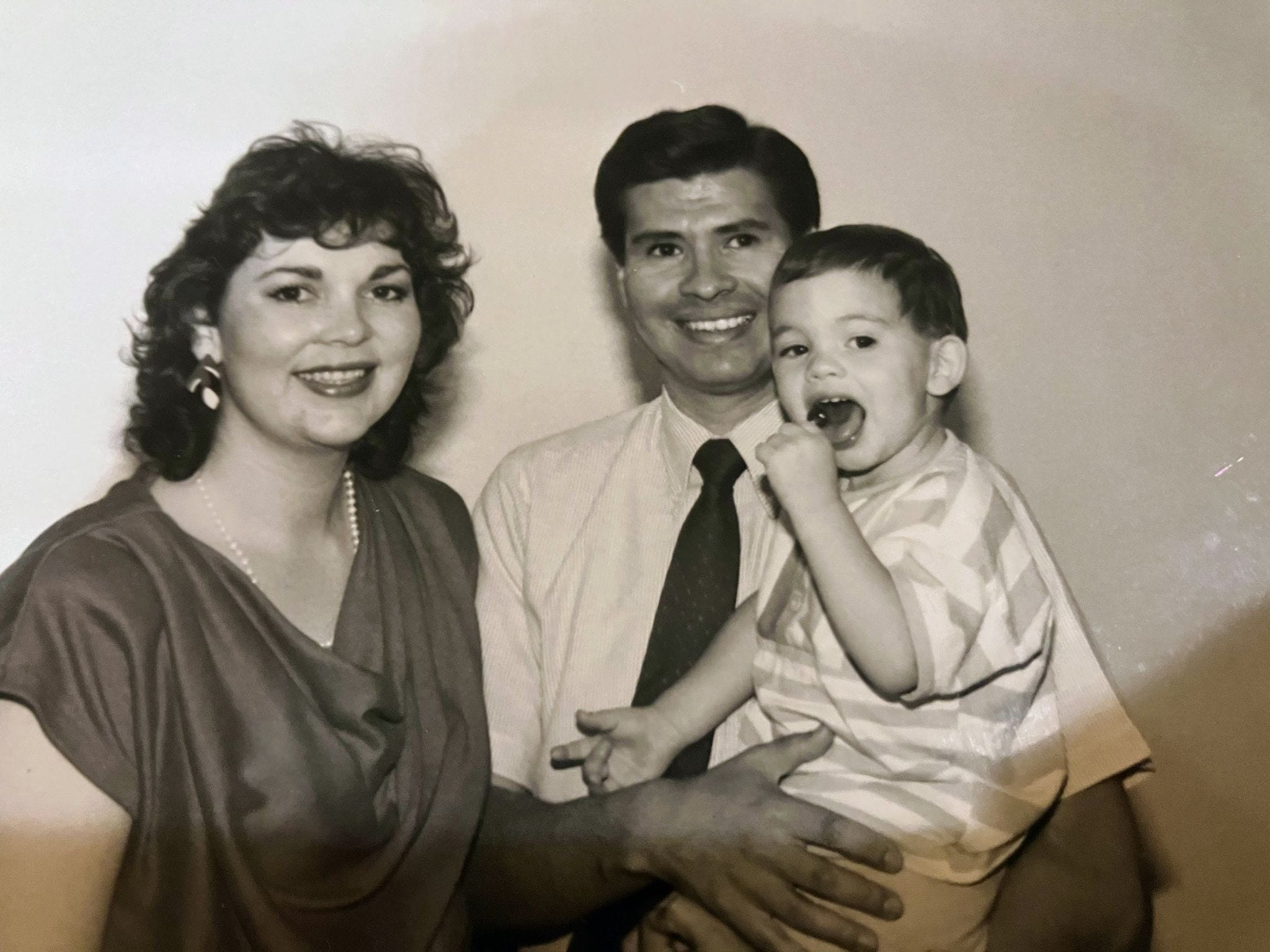
Pictured: Joe, Kim, and Little Ricky.
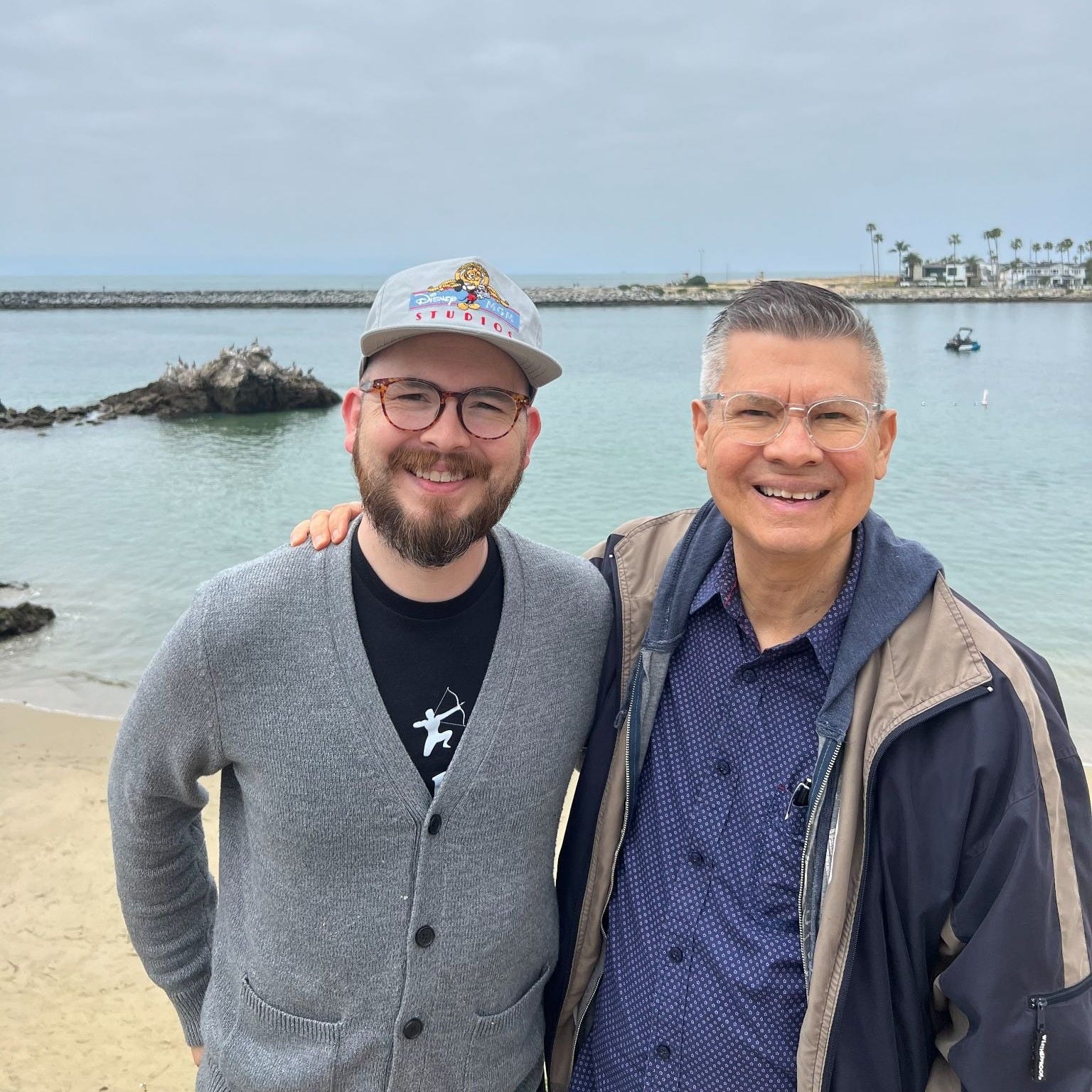
Pictured: Ricky and Joe on a regional pastors retreat together.

Pictured: Joe taking two of the grandsons to the family favorite burger place for some manhood conversations.
Note: The four key principles were adapted from Raising a Modern Day Knight by Robert Lewis but modified over the years by Joe and Ricky.