
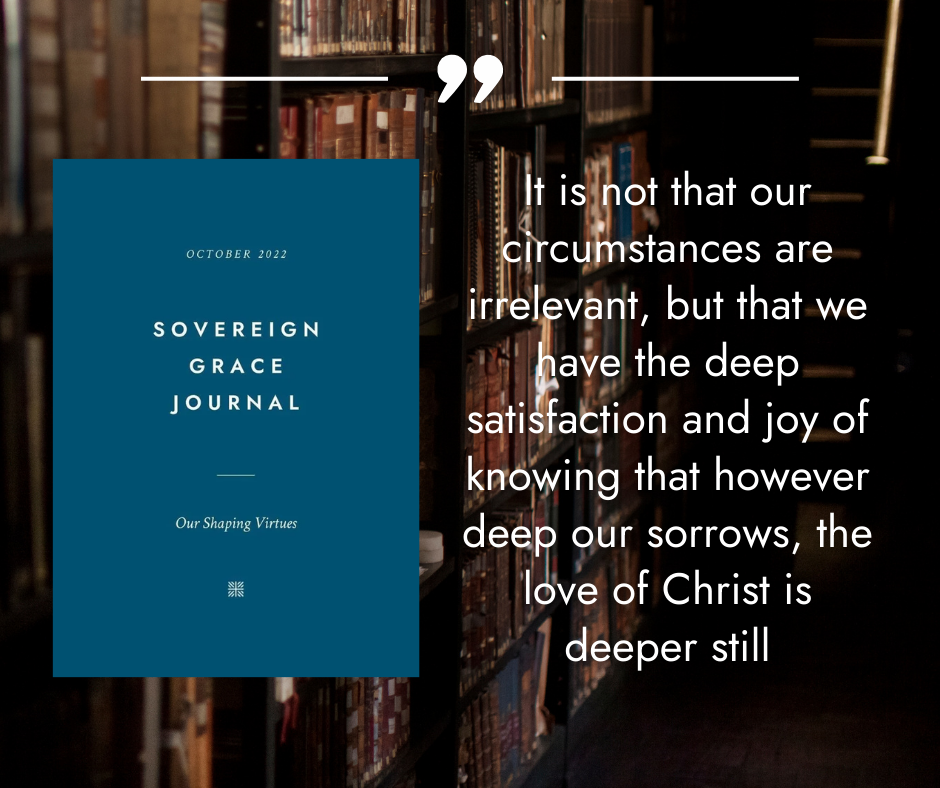
In our family of churches we seek to grow in seven key virtues of the Christian life. Here is a collection of some highlights on the “inward virtues” of godliness, joy, humility, and gratitude. What ties them together is that they illustrate an inward life reshaped by the power of the gospel.
Get free pdfs on the Resource Journals page and Books page of our website or purchase these resources at 10ofthose.com
Godliness
“The world around us defines itself by what it is against. But we want the people who walk into our churches to know what we are for. We are for the supremacy of Christ in all of life. We are for Jesus being exalted in our homes, our relationships, our workplaces, our communities, and in each of our churches. We are for seeking the glory of the Lord, not our own fame, in all that we do. By God’s grace, we want to pursue an abiding joy in Christ, overflowing gratitude for Christ, and sacrificial generosity motivated by Christ. These are tangible expressions that we treasure Christ above all.”
Mark Prater, “Treasuring Christ Together: A Denomination Centered on the Savior” in Christ our Treasure
“Here’s the reality: zeal is not an accomplishment. Zeal is a miracle. It’s a gift of grace that lifts our burdens. It mortifies our selfishness, it conquers our appetites, it subdues our love and preference for things other than God—for ourselves and our ease and our reputation and our glory. Friends, godly affections are not within our power. Why? Because they’re godly affections.”
Jeff Purswell, “Sacred Zeal” (Sovereign Grace Sermons)
“Joy is not rooted in one’s temperament. It’s not rooted in one’s circumstances. Joy is the fruit and effect of the gospel. There is no more joy-inducing topic than the gospel, and joy dissipates in the heart of a pastor when the gospel is assumed or neglected.”
Josh Pannell, “Godliness: Becoming More Like Jesus” in Our Shaping Virtues
Joy
“Joy is not rooted in one’s temperament. It’s not rooted in one’s circumstances. Joy is the fruit and effect of the gospel. There is no more joy-inducing topic than the gospel, and joy dissipates in the heart when the gospel is assumed or neglected.”
C. J. Mahaney, “A Culture of Joy,” in Continue in What You Have Learned: Sermons from C. J. Mahaney that Shaped a Family of Churches
Every day, the greatest danger in the Christian life is losing our joy in Christ. Every day, our greatest need is for our own soul to be happy in God, which is just another way of saying that we must learn to abide in Christ through the Word of God and prayer.”
Jared Mellinger, “Joy: Rejoice in the Lord Always,” in Our Shaping Virtues
Humility
“Oh, the perils of pride! I’ve seen it ruin pastors, marriages, families, relationships, churches—all this among sincere believers. But for all the very real perils of pride, there is also the rich promise of humility. For our God is not only passionately opposed to pride; he is decisively drawn to humility. The omniscient One is aware of all things—nothing escapes his notice—yet he actively searches for one thing. His attention is uniquely drawn to humility: ‘This is the one to whom I will look.’ The humble man will receive grace, and not opposition, because his motive is to glorify God, not himself. God will always support and extend favor to a humble man who pursues God’s will.”
C. J. Mahaney, “Humility: Pursuing True Greatness” in Our Shaping Virtues
Gratitude
“Colossians 3:17 exhorts us: ‘And whatever you do, in word or deed, do everything in the name of the Lord Jesus, giving thanks to God the Father through him.’ In both words of gratefulness and deeds of love, let us make it our aim to cultivate an awareness of God’s grace and activity in our lives and those around us—for the health of our hearts, the encouragement of others, and the glory of the one who has generously and bountifully blessed us in every way. Let us give thanks with grateful hearts as we make our way toward our blessed hope in the day of Christ. For on that day we will join the chorus of heaven in the presence of the Lord singing, ‘Blessing and glory and wisdom and thanksgiving and honor and power and might be to our God forever and ever! Amen’ (Rev. 7:12). Let’s not wait for that great day to start singing; let’s join in that song today!
Ben Kreps, “Gratitude: Abounding in Thanksgiving” in Our Shaping Virtues
Excerpt from Jared Mellinger, “Joy: Rejoicing in the Lord Always” in Our Shaping Virtues
No One Will Take Your Joy
When Jesus spoke to his disciples the night before he died, they were troubled and afraid. Jesus told them that the world would hate them (John 15:19) and that in the world they will have tribulation (John 16:33). Jesus says in John 16:6 that in this moment sorrow has filled their hearts. Yet it is because he knows our frame and cares so greatly for us that he speaks truths to his people for the sake of their joy (John 15:11). Jesus does not call us to die to our joy, rather he is aiming for the fullness of our joy! In John 16:20 he says, “You will be sorrowful, but your sorrow will turn to joy.” And in John 16:22 he says, “So also you have sorrow now, but I will
see you again, and your hearts will rejoice, and no one will take your joy from you.” In John 17:13, he prays to the Father concerning us, “that they may have my joy fulfilled in themselves.”
When Jesus says that his joy will be in us and our joy will be full, he is not saying that he will give all of his followers a chipper personality or that he will plaster our faces with superficial smiles. True joy is not rooted in temperament. Nor is Jesus saying that we will have trouble-free lives. Someone once said that Jesus promised his disciples three things: that they would be completely fearless, absurdly happy, and in constant trouble.
How can trouble and happiness exist together? Because true joy is not rooted in life circumstances. Even as we are “grieved by various trials” (1 Pet. 1:6), we “rejoice with joy that is inexpressible and filled with glory” (1 Pet. 1:8). When we are mistreated for Christ, we should join the early disciples and rejoice that we are counted worthy to suffer dishonor for the name (Acts 5:41). “Count it all joy, my brothers, when you meet trials of various kinds” (Jas. 1:2).
It is not that our circumstances are irrelevant, but that we have the deep satisfaction and joy of knowing that however deep our sorrows, the love of Christ is deeper still. He is with us, he will hold us fast, and he is working in those circumstances in ways we don’t understand, for our good and for his glory.
Excerpt from Ben Kreps, “Gratitude: Abounding in Thanksgiving,” in Our Shaping Virtues
Many of us have gone through the same familiar and very disappointing experience. You start up the car and the dreaded “check-engine” light flickers to life on your dashboard. What could it be? A sensor gone bad? The onset of total engine failure and impending financial ruin? Whatever the cause, we are wise to head to the mechanic and have an expert run a diagnostic test to discern the nature of the problem.
When it comes to the condition of our hearts, we should perceive a warning light that flashes bright red whenever gratitude gives way to grumbling and complaining in our lives. Here’s why: gratitude is an essential indicator of how well we apprehend the grace and goodness of God. When gratitude is absent, we must get to the bottom of it.
Maybe it’s time for a simple check-up or maybe an opportunity for a major overhaul. Whatever the case, let’s allow our hearts to be diagnosed and addressed by the one who knows our hearts better than we do. Let’s consider what God’s Word says about gratitude and how we can increasingly be shaped to experience and express daily the gratitude and thanksgiving that is his due.
God’s Word on Gratitude
It is fitting and appropriate to give thanks to God, for “he himself gives to all mankind life and breath and everything” (Acts 17:25), and “Every good gift and every perfect gift is from above, coming down from the Father of lights” (Jas. 1:17). We are called to recognize that everything we have is a gift from God and therefore our gratitude is to be directed toward God. Furthermore, throughout Scripture we find repeated exhortations such as “Oh give thanks to the Lord; call upon his name; make known his deeds among the peoples” (1 Chr. 16:8)! And, “Oh give thanks to the Lord, for he is good, for his steadfast love endures forever” (Ps. 107:1)!
To be clear, gratitude is not something that only believers experience. Even a hardened atheist can feel grateful in the presence of immense beauty like the Grand Canyon or in the sweet, daily bursts of brilliance as the sun rises and sets. In fact, it is common in our culture to see gratitude as a virtue worth lauding as it brings emotional and physical benefits when cultivated. In the end though, that kind of gratitude is ultimately worthless because a godless gratitude fails to direct our hearts to the one to whom thanksgiving and honor is due.
Tragically, there is a fundamental issue at the heart of fallen men and women—a hardened heart towards God that refuses to express gratitude toward him. The apostle Paul addresses this as he begins his letter to the Romans. In ourselves, we are sinners who stand under the righteous wrath of God and ingratitude is at the core of our rebellion. He writes, “For although they knew God, they did not honor him as God or give thanks to him, but they became futile in their thinking, and their foolish hearts were darkened” (Rom. 1:21). This should correct any impulse to think of ingratitude as merely a character deficiency, a sort of semi-acceptable sin. A failure to honor and thank God describes those who will experience God’s judgment. Elsewhere in Scripture ingratitude is listed with arrogance, brutality, and self-centered love as particular hallmarks of those who deny the power of God (2 Tim. 3:1–5). Gratitude is serious business! It is serious because failure to give thanks to God is failure to honor and glorify the one who created us and who daily provides for us. That is negligence of the most arrogant sort.
In light of our many sins, including our failure to appropriately live a lifestyle of thanksgiving toward our generous Creator, it is stunning, amazing grace that God’s response to our sin was to send what is most dear to him—his own willing Son. Jesus came to his own and his own did not receive him. He was despised and rejected by those who should have received him with grateful hearts. And yet, he came to save us from our sins, including our ungratefulness. In and through his atoning death as our substitute and through his glorious resurrection, our Savior has defeated sin and death and has opened wide the door to heaven through his body so that formerly ungrateful, ungodly, undeserving sinners like you and me can know the grace, forgiveness, and mercy of God.
In light of this mercy and grace from God, we have endless reasons for profound gratitude in every and any season. In Christ, we may rightly declare, “He has raised my soul from death to life! My sins are washed away! I am an adopted child of God! I have been transferred out of the kingdom of darkness into the kingdom of light! My future is glorious!” How can we not be grateful? And so, understandably, the author of Hebrews writes, “Therefore let us be grateful for receiving a kingdom that cannot be shaken, and thus let us offer to God acceptable worship, with reverence and awe” (Heb. 12:28).
In light of the grace of God in Christ, we are exhorted: “Therefore, as you received Christ Jesus the Lord, so walk in him, rooted and built up in him and established in the faith, just as you were taught, abounding in thanksgiving” (Col. 2:6– 7, emphasis mine). “Abounding in thanksgiving” should describe each and every man, woman, and child who has received and understands the immensity of God’s mercy and grace.